


Download a PDF of this week’s Parsha Sheet
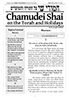
Topics Covered
The yom tov of the giving of the Torah, a day of joy for both soul and body
Specifically on Atzeres (Shavuos), the day the Torah was given, all agree that “lachem” is required
Since their souls departed and then returned to their bodies, we commemorate this through physical eating as well
Why Shavuos is called “Atzeres” by Chazal, and Simchas Torah is called “Atzeres” in the Torah itself
The common bond between Shavuos and Simchas Torah
Shavuos, the yom tov of the renewal of Creation
Decorating with flowers as an allusion that the existence of the world depends upon Torah observance
Additional reasons for decorating the shul with greenery
Themes of Megillas Rus
The mitzvos of leket (gleanings), shikchah (forgotten produce), and pe’ah (corners) in the parashah of the yomim tovim
The intersection of leket, shikchah, and pe’ah with Shavuos and Megillas Rus
The deeper meaning of “Ploni Almoni”
Boaz merely sought to establish a name for Machlon, and through this he merited an eternal good name
The Maharal’s explanation of the connection between leket, shikchah, and pe’ah, on the one hand, and the korbanos on the other
The concept of “as though he built the Beis HaMikdash”
I
The yom tov of the giving of the Torah, a day of joy for both soul and body
It is well known that Rabbi Eliezer and Rabbi Yehoshua disagree (Pesachim 68b) about whether the joy of yom tov is optional or obligatory. Rabbi Eliezer maintains that rejoicing on yom tov is optional, while Rabbi Yehoshua maintains that it is obligatory. According to the opinion that it is obligatory, Chazal state that one must “divide” the day, meaning that one divides the day, dedicating half “to Hashem” through Torah and prayer, and half “lachem” (“for yourselves”), through eating, drinking, and all forms of yom tov pleasure.
Specifically on Atzeres (Shavuos), the day the Torah was given, all agree that “lachem” is required
The Gemara further states there that there are certain yomim tovim on which even Rabbi Eliezer agrees with Rabbi Yehoshua that rejoicing on yom tov is obligatory, and everyone agrees that the day must be divided: “half for Hashem and half for yourselves.” One of these days is Shavuos, as Chazal state: “הכל מודים בעצרת דבעינן נמי לכם”
“All agree that on Atzeres we also require ‘lachem.’ Why? Because it is the day on which the Torah was given.” In other words, one is obligated to spend part of Shavuos eating and drinking because it is the day on which the Torah was given.
At first glance, however, this seems difficult to understand. On the very day the Torah was given, should we not be learning Torah the entire day rather than being obligated to spend half of it eating and drinking? Many greater than I have already addressed this matter, yet Torah is eternal and I, too, must learn from it, and therefore I shall offer my portion with the help of Hashem.
On the verse, “My soul departed when He spoke,” (Shir HaShirim 5:6), the Gemara (Shabbos 88b) expounds that when Bnei Yisrael heard Aseres HaDibros (Ten Commandments) directly from Hakadosh Baruch Hu, their souls departed, and they existed entirely without bodies. Hakadosh Baruch Hu then revived them with the dew with which He will one day resurrect the dead and restore them to life. Thus, at Matan Torah, we were literally like the Malachei Hashares (Ministering Angels), without physical bodies. Yet afterward we returned to being human beings once our souls were restored to us.
Since their souls departed and then returned to their bodies, we commemorate this through physical eating as well
Accordingly, the Gemara in Pesachim becomes perfectly understandable. On Shavuos, one is obligated in “half for Hashem and half for yourselves” precisely because on this day the Torah was given. At Matan Torah, our souls departed and we became like angels, Malachei Hashares, entirely “for Hashem.” Yet afterward, we were revived specifically in order to serve Hashem through the Torah, which is only possible by means of the physical body. This was the ultimate purpose of Matan Torah, that the Torah be given to Bnei Yisrael, not for the Malachei Hashares. We must therefore give thanks and rejoice over that miracle of techiyas hameisim (revival of the dead) that occurred to us and give expression to everything that happened on the day the Torah was given. Therefore, the day must include both “half for Hashem” and “half for ourselves,” corresponding to the revival that we experienced.
II
The reason Chazal refer to Shavuos as “Atzeres,” and why Simchas Torah is called “Atzeres” in the Torah
In the sefer Nesivos Shalom on Shavuos, the author discusses the fact that Shavuos is referred to by Chazal as “Atzeres.” There is also another yom tov called “Atzeres,” namely, Simchas Torah, which is identified as Shemini Atzeres based on the verse: וּבַיּוֹם הַשְּׁמִינִי עֲצֶרֶת תִּהְיֶה לָכֶם “And on the eighth day there shall be an atzeres for you.” Now, Shavuos is not called “Atzeres” in the Torah, but Chazal nevertheless refer to it by that name, as stated in the Gemara (Rosh Hashanah 16a): בעצרת נידונים על פירות האילן “On Atzeres, judgment is passed regarding the fruits of the tree.” Likewise, this terminology appears in the Gemara in Pesachim cited earlier. In addition, Onkelos (Bamidbar 28:26) translates the word “b’shavuosechem” – “on your festival of weeks” – as בעצרתיכון “b’atzartechon” – “on your Atzeres.”
The Nesivos Shalom explains that the reason is because both yomim tovim mark the culmination of a fifty-day period. Shavuos concludes the counting described in the Torah: “You shall count for yourselves… you shall count fifty days.” The counting concludes with Shavuos; therefore it is called Atzeres. Similarly, Shemini Atzeres marks the culmination of another fifty-day period beginning with Rosh Chodesh Elul. This span includes all the Yomim Noraim) High Holidays): Rosh Hashanah, Yom Kippur, and Sukkos, culminating in Shemini Atzeres. Both yomim tovim are therefore called “Atzeres” because they represent the summit of two fifty-day periods of holiness that occur each year.
What Shavuos and Simchas Torah have in common
There is another common element shared by these two days. On Shavuos, we celebrate the receiving of the Torah while on Shemini Atzeres we celebrate with the Torah itself, Simchas Torah.
Neither of these yomim tovim possesses unique physical mitzvos. We do not eat matzah, take the arba minim (lulav, esrog, etc.), or blow the shofar. Rather, we celebrate solely with the Torah itself: the receiving of Torah on Shavuos, and the simcha of Torah on Shemini Atzeres. Both Yomim Tovim are times of love and attachment to Hashem through the Torah He gave us.
III
Shavuos, the yom tov of the renewal of Creation
In Parashas Bereishis, Rashi presents two explanations on the verse:
וַיְהִי עֶרֶב וַיְהִי בֹקֶר יוֹם הַשִּׁשִּׁי – “And it was evening and it was morning, the sixth day.”
The second explanation, based on the Gemara (Avodah Zarah 3a), addresses why the sixth day differs from all the other days by receiving the definite article “ה” or “the.” Rashi summarizes the Gemara’s explanation that all of Creation existed in a conditional state until “the sixth day,” namely, the sixth of Sivan, designated from the time of Creation for the giving of the Torah.
According to the Gemara, Hashem explicitly declared to Creation:
“If Bnei Yisrael accept My Torah” on the sixth of Sivan, “all is well. But if not, I shall return you to chaos and void.”
One cannot describe the immense joy experienced by all of Creation when Bnei Yisrael accepted the Torah more than two thousand years later. Not only did Bnei Yisrael rejoice, all of Creation rejoiced as well.
Decorating with flowers as an allusion that the existence of the world depends upon Torah observance
Based on this, I would humbly suggest an additional explanation for the custom of decorating homes and shuls with branches and flowers on Shavuos. The reason is that we wish to celebrate together with all of Creation, even the plants and branches. We bring them into our shuls and homes in order to celebrate together with them the fact that they merited continued existence on the sixth of Sivan.
We carry an ongoing obligation to study Torah every day in order to sustain the world; as I explained in Chamudei Shai on Parashas Behar, every day one must view the Torah as new, as though we received it anew that very day. I brought proof to this from the wording of Birchas HaTorah (the Torah Blessing), which is phrased in the present tense: ברוך אתה ה’ נותן התורה “Blessed are You, Hashem, Who gives the Torah.”
The central event took place on Shavuos. This day is the primary remembrance of Matan Torah at Sinai, yet in truth we receive the Torah anew every single day. We receive a gift from Hakadosh Baruch Hu, and our task is to accept that gift with open arms. In this way, we participate in the continued existence of Creation and in our own continued existence. Our survival, both spiritual and physical, depends upon Torah study. This is our responsibility.
Additional reasons for decorating the shul with greenery
There are several explanations for the ancient custom of decorating homes and shuls with greenery on Shavuos. One reason is to remind us that “on Atzeres, judgment is passed regarding the fruits of the tree,” so that we pray for them.
Another reason is that at the time of Matan Torah, animals were forbidden from grazing at the foot of the mountain. This is puzzling: since Har Sinai was located in the Wilderness of Sinai, where would grass and vegetation emerge in the desert? Rather, a miracle occurred at Har Sinai, and all kinds of vegetation grew at the foot of the mountain at the time of the giving of the Torah. To commemorate this miracle, we decorate our homes and shuls with greenery.
Another explanation may be suggested based on a teaching of Rabbi Yehoshua ben Levi (Shabbos 88b):
“With every commandment that emerged from the mouth of Hakadosh Baruch Hu, the entire world became filled with fragrance.” The deeper meaning is that we experienced each of the Aseres HaDibros with a unique and elevated perception. We experienced each commandment with all our senses. We did not merely hear the words; we also saw them and even smelled them. All the senses participated, and each commandment possessed its own distinct fragrance. To commemorate this miracle, the beauty of the event of the giving of the Torah, and the fact that we experienced the revelation of Torah through all our senses, including fragrant aromas, we bring flowers with various scents into our homes and shuls.
These are some of the explanations for this custom, though there are additional reasons as well. The Vilna Gaon was concerned that this custom, despite its ancient and well-established roots, might appear to imitate non-Jewish practices, and therefore wished to abolish it. But it remains an ancient and firmly established custom with a long-standing tradition.
May it be Hashem’s will that we merit to take this great day and adorn ourselves with the flowers and blossoms of our holy Torah, and to be embraced by it and attached to it, in the manner of Moshe Rabbeinu alav hashalom, who existed entirely “for Hashem” when he received the Torah, and for all forty days did not eat bread or drink water. May we merit, through Torah study, to elevate and sanctify ourselves with holiness, and may abundant blessing flow to us throughout all the worlds. May this stand as a merit for all of us, and may we merit the coming of Moshiach. Amen.
IV
Themes of Megillas Rus
Leket, shikchah, and pe’ah in the parasha of the festivals
The Torah states:
“ובְקֻצְרְכֶם אֶת קְצִיר אַרְצְכֶם לֹא תְכַלֶּה פְאַת שָׂדְךָ בְּקֻצְרֶךָ וְלֶקֶט קְצִירְךָ לֹא תְלַקֵּט, לֶעָנִי וְלַגֵּר תַּעֲזֹב אֹתָם אֲנִי ה‘ אֱלֹקֵיכֶם” (ויקרא כג, כב)
When you reap the harvest of your land, you shall not remove completely the corners of your field as you reap, nor shall you gather the gleanings of your harvest; for the poor and the proselyte shall you leave them; I am Hashem, your G-d (Vayikra 22:23).
In Parashas Emor, the Torah presents the section of the yomim tovim, including the three pilgrimage festivals, Rosh Hashanah, and Yom Kippur. Beyond reading this section as part of the annual Torah reading of Parashas Emor, this section of the festivals also serves as the Torah reading for several of the yomim tovim. The section begins with Pesach, continues with the days of the Omer, Shavuos, Rosh Hashanah, Yom Kippur, and Sukkos. However, after the festival of Shavuos, before Rosh Hashanah, the Torah inserts the above pasuk about the commandments of leket, shikcha, and pe’ah (various portions of the harvest which the Torah grants to the poor). This seems out of place for two reasons:
a) First, these are not laws of the festivals.
b) These mitzvos were already stated in the previous Parasha, so why repeat them here?
The commentators addressed this question, and I will bring two of the early Rishonim to shed light on this matter.
Rashi writes : “It repeated in order that one transgresses two negative commandments for them. Rav Avdimi bar Rebbi Yosef said: Why did the Torah place it in the midddle of the festival, with Pesach and Shavuos on one side, and Rosh Hashanah, Yom Kippur, and Sukkos on the other? To teach you that whoever gives leket, shikcha, and pe’ah to the poor properly, it is as if he built the Beis HaMikdash and offered his korbanos within it.”
The Ibn Ezra writes on “When you reap the harvest of your land” : “A second time, because the festival of Shavuos is the time of the first fruits of the wheat harvest, the Torah warns not to forget what I commanded you to do in those days.”
The intersection of leket, shikcha, pe’ah, Shavuos, and Megillas Rus
The words of Ibn Ezra are readily understood. According to Rashi and the words of Rav Avdimi that he cites, however, we may still ask: the pasuk of leket, shikcha, and pe’ah could have been placed anywhere within the section of the festivals, so why did the Torah choose to place it specifically after Shavuos?
When I reflected on the pasuk, I recalled Megillas Rus, where the entire book revolves around the kindnesses Boaz showed to Rus through these very mitzvos of leket, shikcha, and pe’ah. Rus was both poor and a convert, precisely “for the poor and proselyte.” as mentioned in the pasuk. Ultimately, through this kindness, the kingdom of the House of Dovid Hamelech was built.
There is much to expound on the depth of the inner meaning that through kindness one merits the building of the monarchy. For now, let us consider the context of the timing, as per the words of the Ibn Ezra.
Rus began her journey to Judaism and Klal Yisrael, returning with Naomi “at the beginning of the barley harvest” (Rus 1:22). Rashi explains that this refers to the harvest of the Omer. As is known, the days of the Omer are the preparation for receiving the Torah on the festival of Shavuos. Indeed, the giving of the Torah in that generation of the Exodus from Egypt was akin to actual conversion, as stated in Maseches Yevamos, much like the conversion of Rus.
It is known that Shmuel Hanavi wrote Megillas Rus to highlight the importance of the lineage of Dovid Hamelech, and indeed, the yahrzeit of Dovid Hamelech falls on the festival of Shavuos. See the Sefas Emes on Shavuos, who adds a wonderful idea that the Megillas Rus corresponds to the acceptance of the Oral Torah, it is precisely through the power of the Oral Torah that we expound עמוני ולא עמונית, מואבי ולא מואבית “Ammonite, but not Ammonitess; Moabite, but not Moabitess.” This is the validation of the eligibility of the House of Dovid Hamelech to enter the congregation of Hashem and be worthy of the monarchy.
The depth of the matter of “Ploni Almoni”
Based on our words and the holy words of the Sefas Emes, it occurred to me regarding what is written:
“וַיֹּאמֶר הַגֹּאֵל לֹא אוּכַל לִגְאֹל לִי פֶּן אַשְׁחִית אֶת נַחֲלָתִי, גְּאַל לְךָ אַתָּה אֶת גְּאֻלָּתִי כִּי לֹא אוּכַל לִגְאֹל” (רות ד, ו)
And the redeemer said, ‘I cannot redeem it for myself, lest I ruin my inheritance. Redeem it for yourself; you take my right of redemption, for I cannot redeem’ (Rus 4:6).
Rashi on “Lest I ruin my inheritance” : My offspring, as it says: ‘Children are the inheritance of Hashem.’ He feared creating a blemish in his descendants, as it is written : ‘An Ammonite or Moabite shall not enter the congregation of Hashem.’ and he erred regarding ‘Ammonite, but not Ammonitess; Moabite, but not Moabitess.’” The law excludes only a Moabite man, not a Moabite woman.
One may say that since Ploni Almoni was so concerned for his own name and family reputation, lest there be some “blemish” in the eyes of others because of marriage to a Moabite convert, and he did not accept with complete faith the ruling of the righteous judge and his court, which represent the power of the Oral Torah, he was punished measure for measure. His name and his family’s name were completely forgotten, known forever only as “Ploni Almoni.”
Thus, was fulfilled precisely in him what our Sages taught: ״כל הרודף אחר הכבוד, הכבוד בורח ממנו״ – “He who chases after honor, honor flees from him” (Eruvin 13b). He sought to be honored with his name, and his name was forgotten.
Boaz sought only to establish a name for Machlon, and he merited an eternal good name
In complete contrast to “Ploni Almoni,” Boaz did not seek to aggrandize his own name but rather to establish a name for Machlon, Rus’s husband, who died without an heir to continue his name and his family’s line. As it is written:
“וְגַם אֶת רוּת הַמֹּאֲבִיָּה אֵשֶׁת מַחְלוֹן קָנִיתִי לִי לְאִשָּׁה לְהָקִים שֵׁם הַמֵּת עַל נַחֲלָתוֹ וְלֹא יִכָּרֵת שֵׁם הַמֵּת מֵעִם אֶחָיו וּמִשַּׁעַר מְקוֹמוֹ עֵדִים אַתֶּם הַיּוֹם” (רות ד, י)
“And also Rus the Moabitess, the wife of Machlon, I have acquired as my wife, to raise up the name of the deceased upon his inheritance, so that the name of the deceased will not be cut off from among his brothers and from the gate of his place; you are witnesses today.” (Rus 4:10).
Boaz sought only to establish a name for Machlon. Even this noble act he was prepared to give to Ploni Almoni to perform this noble act in his place, had he wished to do so. When the elders of the city saw the selflessness of Boaz, that he fled from honor and sought only to give name and honor to others, they blessed him with the words:
“יִתֵּן ה‘ אֶת הָאִשָּׁה הַבָּאָה אֶל בֵּיתֶךָ כְּרָחֵל וּכְלֵאָה אֲשֶׁר בָּנוּ שְׁתֵּיהֶם אֶת בֵּית יִשְׂרָאֵל, וַעֲשֵׂה חַיִל בְּאֶפְרָתָה וּקְרָא שֵׁם בְּבֵית לָחֶם” (רות ד, יא)
“May Hashem make the woman who is coming into your house like Rachel and like Leah, both of whom built the House of Israel, and may you prosper in Ephrath and be famous in Bethlehem.” (Rus 4:11)
Beyond the teachings of our Sages and the commentators regarding why the elders, who were all from the tribe of Yehudah, placed Rachel before Leah, it seems possible to add that they were alluding to Boaz that he was truly in the category of Rachel. Rachel was ready to give up her personal destiny and her portion in Klal Yisrael, by giving the signs to Leah so as not to shame her. Similarly, Boaz intended only for the benefit of Machlon’s name and was willing to “honor” “Ploni Almoni” with this noble act.
Just as Rachel merited through her noble deeds to be the “mistress of the house,” the principal mother of the household, so too Boaz, who fled from aggrandizing his name, will merit “and be renowned in Beis Lechem,” which Rashi explains: “May your name become great.”
The Maharal of Prague on the connection between leket, shikcha, pe’ah and korbanos
Now let us return and examine the words of Rashi in light of all what we have written above. First, we will preface with what the Maharal of Prague, wrote in his sefer Gur Aryeh on Rashi to explain why specifically leket, shikcha, and pe’ah are considered as if one built the Beis HaMikdash and offered all its korbanos within it.
Every act of kindness gives satisfaction before Hakadosh Baruch Hu. Yet, in this case, Hashem commanded that it be done in this specific manner through leket, shikcha, and pe’ah, with detailed laws and not just as general charity. Since every detail of the act is performed in accordance with the command of Hashem, it is therefore considered like a korban, wholly dedicated to Hashem.
The Maharal’s words illuminate why these gifts of leket, shikcha, and pe’ah are compared to a korban before Hashem. Yet they still leave room for us to explain why it is considered as though one built the Beis Hamikdash and offered all its korbanos within it.
The meaning of “as if he built the Beis HaMikdash”
It seems to me, based on the words of Chazal: “Ulla said, Jerusalem will be redeemed only through charity, as it is said, ציון במשפט תפדה ושביה בצדקה – ‘Zion shall be redeemed with justice, and her captives with charity’” (Shabbos 139a). The idea that redemption and the rebuilding of Jerusalem depend on charity and kindness, appears frequently in the words of Chazal.
Behold, Jerusalem is the place of the Beis HaMikdash and the place of the monarchy of the House of Dovid Hamelech, which are interdependent, as is known. All this flows from the giving of the Torah on Shavuos, through which the Shechinah, which is the kingship of Hashem, descended to the earth, and through this, we have the monarchy of the House of Dovid Hamelech and our Beis HaMikdash.
The words of Rav Avdimi son of Rebbi Yosef were fulfilled in Boaz. He properly gave leket, shikchah, and pe’ah to Rus, who was literally both “לעני ולגר” poor and a proselyte. Through this, he merited the monarchy through his grandson, Dovid, Hamelech and the building of the First Beis HaMikdash through his grandson, Shlomo Hamelech.
Indeed, through this specifically, he merited “the eternal aggrandizement of his name,” for the pillars of the Beis HaMikdash were called “Yachin and Boaz.” So too will it be in the building of the third and eternal Beis HaMikdash through his descendant, the King Mashiach, may he come speedily in our days, Amen.